
For Research Use Only. Not for human consumption.
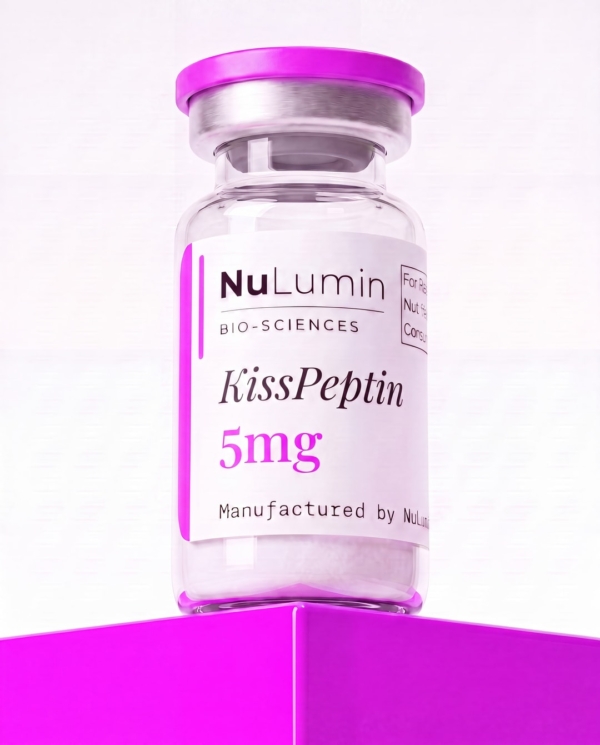
10mg
Kisspeptin-10
- Form
- Lyophilised powder
- Launch formats
- [Confirm vial size with the launch catalogue]
- Purity
- [Confirm against certificate of analysis]
- Molecular weight
- 1302.42 Da
- Molecular formula
- C63H83N17O14
- CAS number
- 374675-21-5
- Class
- Decapeptide fragment of the KISS1 gene product
- Also known as
- Metastin (45-54), KP-10
Overview
Kisspeptin-10 is a ten-amino-acid fragment of the protein encoded by the KISS1 gene, and a central signalling molecule in reproductive biology. Kisspeptin neurons sit at the very top of the hormonal cascade that controls the reproductive axis, upstream of gonadotropin-releasing hormone itself, a discovery from the early 2000s that reshaped the field.Mechanism in research
Kisspeptin acts on the KISS1 receptor to trigger GnRH release, and it has been studied in human clinical research at academic centres as well as extensively in the laboratory. That makes it an unusually well-grounded compound in this catalogue: its receptor, its physiology and its clinical effects are all documented in the peer-reviewed literature. Human clinical research existing is not the same thing as this product being approved for human use; it is not.
Research applications
- KISS1 receptor pharmacology
- Reproductive axis and GnRH signalling research
- Neuroendocrinology studies
- Puberty and fertility biology models
Selected research
- de Roux N et al. Proceedings of the National Academy of Sciences, 2003
- Seminara SB et al. New England Journal of Medicine, 2003
- Dhillo WS et al. Journal of Clinical Endocrinology and Metabolism, 2005
Evidence status: In vitro, animal and human clinical research.
Important: Research findings describe the studies cited and should not be interpreted as evidence that this product is suitable for human or veterinary use.
Studied alongside: CJC-1295 No-DAC
Supplied in sealed vials with HPLC purity testing and a downloadable certificate of analysis on this page.
- Shipping manifest
- Orders process in 1–3 business days
- Free ground shipping over $200
- Tracked, US-only delivery
- Packaging
- Individually sealed amber-glass vials
- Room-temperature stable in transit
- Batch and lot printed on every label
- Documentation
- 99%+ HPLC on the batch certificate
- US-synthesized, cGMP facility
- Certificate findable by batch number
Storage and handling
Where applicable, products are supplied as lyophilised (freeze-dried) powder in individually sealed glass vials; the format and quantity for each compound are stated on its product page. Storage information is provided according to the product documentation supplied with each material, and the storage conditions on the product page and certificate are the ones to follow. As general laboratory practice, keep vials sealed and protected from light and moisture, and avoid repeated freeze-thaw cycles once a material has been reconstituted. Reconstitution, and the choice of solvent and technique, is the responsibility of the purchasing researcher and depends on the requirements of the study. We do not provide preparation or administration guidance of any kind. [Build note: storage conditions must be supplier-verified per product, not published as a universal claim.]
What is in the vial
The named compound in the format stated on its product page, sealed in a glass vial, with nothing added beyond what the certificate of analysis states. [Confirm excipient position with the supplier: if vials contain mannitol or other bulking agents, the certificate and this copy must say so.]
Research use notice
This product is sold strictly for laboratory research. It is not intended for human ingestion, medical or veterinary use, cosmetic use, or any form of in-vivo application. By placing an order, the buyer confirms that the product will be handled by suitably qualified personnel, used solely for in-vitro research, and held in compliance with all laws and regulations that apply to the buyer.
[Build note: this block should appear above the fold on every product page, near the price and add-to-basket button, not buried at the foot of the page. Its position is part of the compliance story: it demonstrates the condition of sale was presented before purchase, not after.]
Legal and compliance
Every product sold by Proba Research is a laboratory reference material, supplied for in-vitro research use only. No product on this site is a medicine, a supplement, a food, or a cosmetic, and nothing on this site is approved for administration to humans or animals in any circumstances.
Purchases are accepted only on the basis of our Terms of Service. In placing an order, the buyer acknowledges and agrees that:
- The products will be used solely for legitimate in-vitro laboratory research.
- The products will be handled and stored only by persons qualified to work with research chemicals.
- The buyer is responsible for compliance with all laws and regulations that apply to the purchase, possession and use of research compounds in their jurisdiction.
- Proba Research accepts no liability for loss, injury or legal consequences arising from misuse, unauthorised use, or use contrary to these terms.
Orders that give us reason to believe the products are intended for anything other than laboratory research will be refused or cancelled.
[Legal note for Nick: this wording is drafted as marketing copy to a compliance standard, not as legal advice. Have a solicitor review this block, the Terms of Service and the RUO disclaimer page together before launch so all three say the same thing. Two additions worth making at build stage: a tick-box acknowledgement of these terms at checkout, and a link from this block to the full disclaimer page. Both strengthen the legal position and high-risk payment gateways commonly expect to see them during merchant review.]